
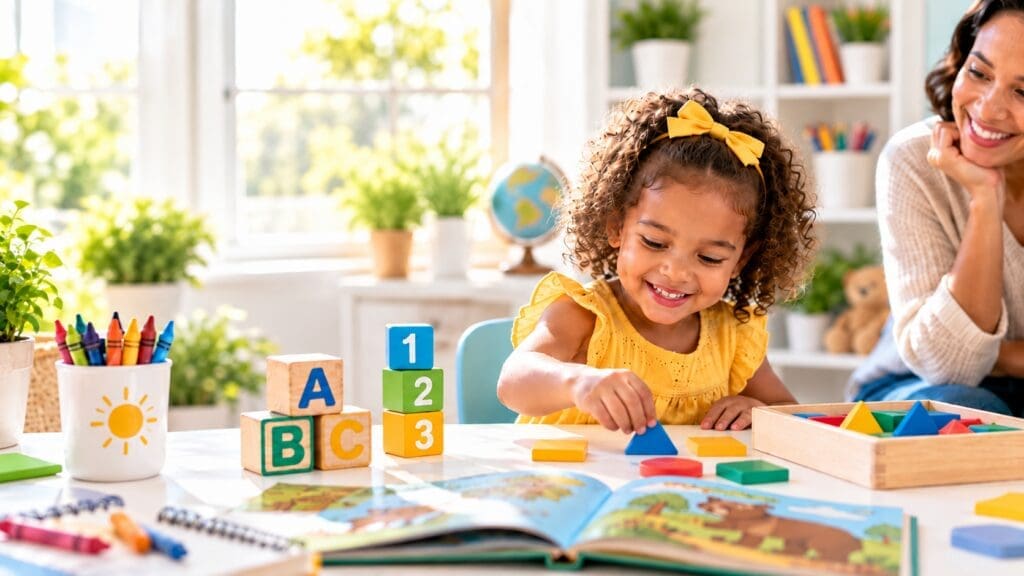
When parents think about kindergarten readiness, they often picture children recognizing letters, counting numbers, or writing their names.
While these early academic skills are important, preparing for kindergarten involves so much more.
Kindergarten readiness includes a child’s growing ability to communicate, manage emotions, follow routines, interact with others, and approach new experiences with curiosity and confidence.
The good news? Parents don’t need expensive learning materials or complicated lesson plans to help their children develop these skills.
Many of the most valuable learning opportunities happen naturally through everyday conversations, playtime, family routines, and simple activities at home.
Here are eight important skills that help prepare preschoolers for kindergarten, along with practical ways to encourage their development.
1. Communication: Expressing Needs, Thoughts, and Feelings
Communication is an important part of a child’s early learning experience.
In kindergarten, children use communication skills to ask questions, participate in conversations, share ideas, and let their teachers know when they need help.
Try this at home:
- Ask open-ended questions such as “What was your favorite part of today?”
- Encourage your child to describe what they’re building, drawing, or playing.
- Read books together and ask what they think might happen next.
- Practice asking for help using words, gestures, or communication supports appropriate to your child’s needs.
Why it matters: Children who develop effective communication skills have more ways to express themselves, participate in learning, and connect with others.
2. Emotional Development: Understanding and Managing Feelings
Starting kindergarten introduces new experiences, expectations, and relationships.
Children may feel excited one moment and frustrated or overwhelmed the next. Learning to recognize emotions and develop healthy ways of responding is an important part of growing up.
Emotional regulation develops gradually, and young children still need guidance and reassurance from adults.
Try this at home:
- Help your child name emotions, such as happy, frustrated, nervous, or disappointed.
- Talk about how characters in books might be feeling.
- Practice calming strategies, such as taking slow breaths or spending quiet time together.
- Acknowledge feelings while maintaining clear, consistent boundaries.
For example, instead of saying, “Stop being upset,” try, “I can see you’re frustrated because the blocks fell down. Would you like to try again together?”
Why it matters: Understanding emotions helps children navigate challenges, develop resilience, and build positive relationships.
3. Social Skills: Learning to Share, Cooperate, and Take Turns
Kindergarten is a social environment where children learn alongside their peers.
Skills such as taking turns, listening to others, sharing materials, and resolving small disagreements develop through repeated interactions and practice.
Children don’t need to master these skills before kindergarten. They simply benefit from opportunities to develop them.
Try this at home:
- Play simple board games that involve taking turns.
- Give your child opportunities to play with other children.
- Practice asking before taking someone else’s belongings.
- Encourage teamwork during everyday tasks, such as cleaning up toys together.
Why it matters: Positive social experiences help children develop friendships, cooperate with classmates, and feel connected to their classroom community.
4. Independence: Building Confidence Through Everyday Routines
One of the most helpful ways to prepare children for kindergarten is to encourage age-appropriate independence.
Simple routines give children opportunities to make decisions, solve small problems, and take responsibility for their belongings.
Try this at home:
- Encourage your child to put away toys after playing.
- Practice opening lunch containers and managing a backpack.
- Let your child choose between two weather-appropriate outfits.
- Encourage handwashing and other personal care routines, providing support when needed.
Remember, independence doesn’t mean doing everything perfectly or without assistance.
Why it matters: Practicing everyday routines helps children become more comfortable handling familiar tasks and asking for support when they need it.
5. Listening and Attention: Following Directions and Staying Engaged
In kindergarten, children participate in stories, games, classroom discussions, and group activities.
The ability to listen, follow simple directions, and remain engaged in an activity develops over time.
According to the Centers for Disease Control and Prevention (CDC), paying attention for approximately 5 to 10 minutes during an activity, such as storytime or arts and crafts, is a common developmental milestone around age five.
Try this at home:
- Play “Simon Says” to practice listening and following instructions.
- Give simple directions during everyday activities.
- Work on puzzles together.
- Read short stories and ask questions about what happened.
- Play freeze dance to practice listening and self-control.
Why it matters: Listening and attention skills help children participate in classroom activities, understand instructions, and explore learning experiences.
6. Early Literacy: Developing a Love for Books and Language
Does your child need to know how to read before kindergarten?
No. Independent reading is not a universal requirement for kindergarten readiness.
Early literacy is about building the foundation for future reading and writing.
Children begin developing literacy skills by listening to stories, recognizing familiar sounds, exploring books, noticing letters, and experimenting with drawing and writing.
Try this at home:
- Read together regularly, even if it’s just one short book.
- Point out letters on signs, packages, and everyday objects.
- Sing nursery rhymes and play rhyming games.
- Encourage your child to recognize the letters in their name.
- Let your child tell a story using pictures.
Try asking, “Can you find another word that starts with the same sound as your name?”
Why it matters: Early literacy experiences support language development, comprehension, and the foundational skills children use when learning to read.
7. Early Math: Learning Numbers Through Everyday Play
Early mathematical thinking develops long before children begin solving equations.
Preschoolers build math skills by counting objects, identifying shapes, noticing patterns, comparing quantities, and sorting items.
The best part? Opportunities to practice early math are everywhere.
Try this at home:
- Count steps while walking upstairs.
- Sort toys by color, shape, or size.
- Count pieces of fruit while preparing a snack.
- Look for circles, squares, and triangles around the house.
- Create simple patterns using blocks or other toys.
For example, while folding laundry, ask, “Can you find two socks that match?”
Why it matters: These simple experiences help children develop number sense, recognize patterns, and practice logical thinking.
8. Fine Motor Skills: Preparing Little Hands for Big Tasks
Fine motor skills involve the small muscles in the hands and fingers that children use for tasks such as drawing, buttoning clothing, turning pages, and handling classroom materials.
Building these skills helps children become more comfortable with activities they will encounter in kindergarten.
Try this at home:
- Roll, squeeze, and shape playdough.
- Draw and color using crayons or markers.
- Practice cutting paper with child-safe scissors and supervision.
- Build with small blocks or age-appropriate construction toys.
- Practice fastening buttons and zippers.
Why it matters: Fine motor development supports writing readiness, coordination, creativity, and everyday independence.
How Much Time Should Parents Spend on Kindergarten Readiness Activities?
You don’t need to turn your home into a classroom.
Short, meaningful learning opportunities throughout the day can help children practice important skills without making learning feel like work.
Cooking dinner can become a counting activity. Grocery shopping can introduce colors, shapes, and new vocabulary. Bedtime stories can encourage conversation and imagination.
The goal is to make learning a natural and enjoyable part of family life.
Follow your child’s interests, allow time for free play, and remember that children develop at different rates.
Frequently Asked Questions About Kindergarten Readiness
What should a child know before starting kindergarten?
Children benefit from developing communication, social, emotional, early literacy, math, independence, and motor skills. However, kindergarten readiness is not determined by one checklist, and children begin school with different experiences and abilities.
Does my child need to know the alphabet before kindergarten?
Recognizing letters and connecting letters with sounds can be helpful, but children do not need to have mastered the entire alphabet before entering kindergarten. Reading together, singing alphabet songs, and noticing letters in everyday life can support early literacy.
How can I help my preschooler prepare for kindergarten at home?
Read together, encourage independent routines, practice counting through play, help your child understand feelings, and provide opportunities for social interaction. Consistent, enjoyable experiences are more helpful than pressuring children to achieve every skill at once.
What if my child is struggling with certain kindergarten readiness skills?
Every child develops at their own pace, and children may need different types of support. Talk with your child’s preschool teacher or pediatrician if you have concerns about their development. They can help identify appropriate next steps and resources.
Every Little Step Matters
Kindergarten readiness isn’t about having every skill mastered before the first day of school.
It’s about giving children opportunities to explore, practice, make mistakes, ask questions, and grow in confidence.
At Sunshine Schools NC, we believe learning happens through meaningful experiences, positive relationships, and everyday discoveries.
Whether at home or in the classroom, families and educators play an important role in supporting children’s growth and development.
So the next time your child counts their toys, helps put away groceries, makes up a story, or works through a tricky puzzle, remember:
They’re not just playing or completing a task. They’re building skills that will support their learning for years to come. 🌞